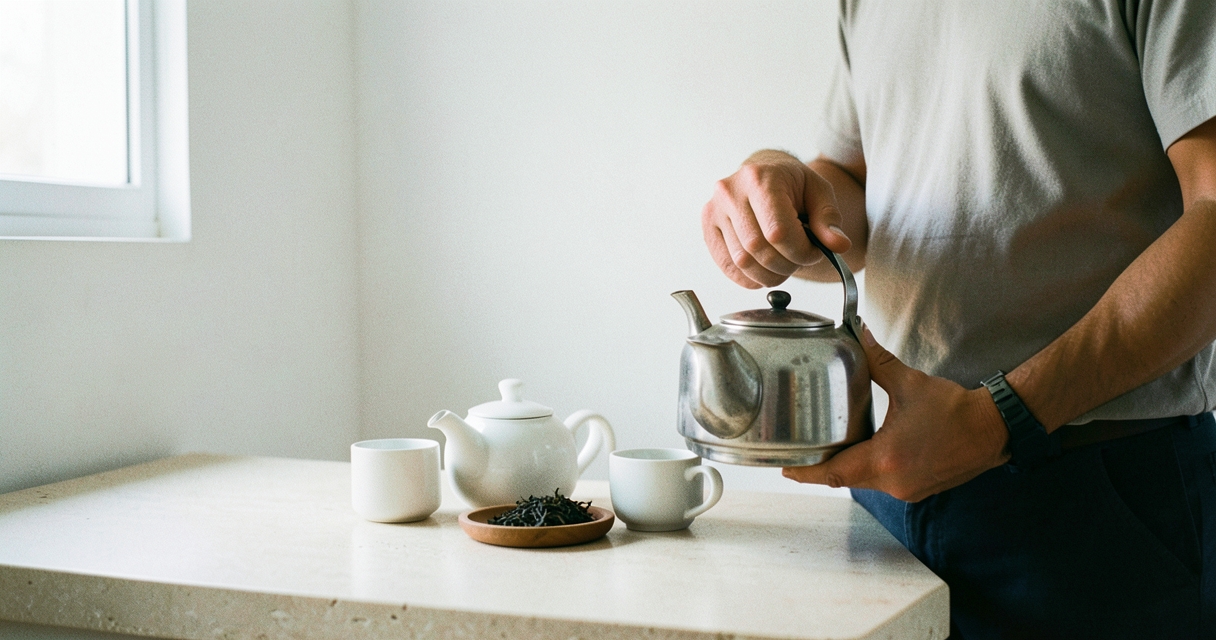
Wash, fill, add tea, wait, discard, wash again: daily tea becomes a tiny home factory. A Japanese municipality reported FY2024 average supply revenue of ¥185.85/m³ (1,000 L), about ¥0.186/L, ¥0.37/2 L and roughly ¥136/year at 2 L/day. Assuming ¥80 per 2 L bottle gives ¥29,200/year. The ¥136 figure shows scale, not the actual household bill, because the published number is a system average. Bottles buy convenience but add carrying, storage and waste. If brewing is the nuisance, remove brewing: drink tap water or chill it in a clean container. Japanese tap water is quality-controlled and disinfected; after long non-use let it run first, while filtered water should not be stored too long. Cheapest: tap. Convenience: bottles. Flavor plus work: homemade tea. If tea is not the goal, shut down the home tea factory.
Tired of making tea: tap or bottled water?
How reading tools work
Listen reads the article aloud. Speed read shows phrases in sequence at your chosen pace. Language practice compares available translations. Save keeps a bookmark in this browser; find it in the player’s bookmarks.
Share this article
Read this today
Each one answers a question readers of this article tend to ask next.
- Even If the Shrimp Becomes Food, It’s “Just a Minor Burn”: How Far Can the Rabbit Doctor Restore Black Tiger—even After Digestion and the Sewer?Same topic
- What Is Kagoshima Shirokuma Shaved Ice? Trying It at Tenmonkan MujyakiSame topic
- What Is Fine Dining Actually Like, and What Are You Paying For? — Eating Alone at Rokkakudo and RESTAURANT KEI Revealed “Food + Live Show + Regional Exhibition”Same topic
- Why Is Malatang So Popular? I Tried It and Found a “Texture Game” Where the Broth Saves EverythingSame topic
- The AC Was Set to 21°C and It Was Still Hot: A 40-Minute Wait for Tofu Dengaku at Kikuso, a 200-Year-Old Toyohashi Restaurant Where Edo, Showa and Reiwa CoexistSame topic
- How to Get Your Money’s Worth at Shabu-yo Dinner: Is “12 Plates of Beef” Really the Break-Even Point, and Why Is It a Different Brand from Gusto?A different angle
Was this article helpful?
Thank you. Your answer helps us improve our articles.
Only an anonymous count is kept. No text or personal information is sent.