My final day in Kagoshima can be summarized in two lines:
Enjoy the hotel. Visit Chiran. Done.
That sounds almost empty, yet those two things filled nearly the entire day.
The funniest part came on the airport bus. A couple behind me was talking about how inconvenient getting around felt. Almost immediately, the bus announcement reminded everyone that passengers could not get off midway.
Perfect timing. Public transport itself had joined the conversation.
And yet the trip was genuinely fun. I did not build a minute-by-minute itinerary. I researched the basics, chose a few anchors, and improvised the rest.
1. A loose itinerary worked better than expected
The plan was basically:
- enjoy a good hotel;
- visit Chiran;
- eat Kagoshima food;
- decide the rest on the spot.
That was enough.
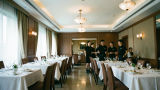
The hotel breakfast deserved time. The hotel itself deserved time. Chiran definitely deserved time.
Chiran is not the kind of place where you glance at a few displays, take a photo and race to the next attraction. Letters, films and personal records slow you down.
If I had added three more sightseeing stops, the day might have looked more productive on paper but felt much thinner in memory.
Sometimes two deep experiences beat six checkboxes.
2. The buses were the real final boss
If I had to name the three strongest impressions from this trip, they would be:
- food;
- Chiran;
- buses.
Motion sickness, limited departures, confusing boarding points, waiting, and the airport transfer all demanded more attention than expected.
Getting to Chiran was worth it. Getting to Chiran was also tiring.
Both statements can be true.
For travelers using public transport in Kagoshima, the practical lesson is simple: do not only plan where you want to go. Plan how you are getting back.
The return trip can quietly become the backbone of the entire day.
3. Chiran was absolutely worth the effort
Chiran stayed with me for a different reason.
The exhibits are not just “war history” in the abstract. They force you to look at individual people, families, letters and choices made inside a much larger system.
It is easy, from a safe distance, to say, “I would have done this.”
The documents make that confidence harder.
Social pressure, organizations, expectations, historical circumstances and limited choices all matter.
What I carried away was not a romantic lesson about sacrifice. It was a harder question:
How much of your own will can you keep when everyone around you expects the same answer?
That is a much more uncomfortable question, and probably a more useful one.
4. “Kagoshima food is amazing” comes with a sampling problem
One conclusion from the trip was extremely strong:
Kagoshima food is great.
There is one methodological issue.
I kept choosing nice hotels and good restaurants.
Of course the food was good.
This was not a scientific survey of the prefecture. I was voluntarily drawing from a deck stacked with winning cards.
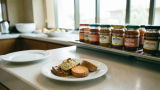
Still, the meal at Suiren stood out. The food was excellent, but even the rice made an impression. Sweet elements were memorable too. I somehow missed eating a piece of brown sugar by itself, although it may well have appeared in a dish or dessert along the way.
Then there was shirokuma shaved ice, hotel breakfast, local dishes and more.
My brain has now stored a very convenient conclusion:
Kagoshima = eating usually ends well.
Statistically questionable. Emotionally accurate.
5. The couple I envied most was at breakfast
Travel destinations are full of couples taking photos and walking hand in hand.
Strangely, the scene that made me most jealous was much quieter.
A couple at the hotel breakfast.
They were not doing anything dramatic. They had simply stayed in the same place, woken up, and were having breakfast together.
That ordinary-looking moment hit harder than a scenic date.
Maybe the thing I envy is not “dating” itself.
It is the feeling of sharing the same morning with someone you love.
Travel is special, but hotel breakfast can look almost domestic. That mix is powerful.
6. Travel is food. Spring is dawn.
The memories that stick hardest are often edible.
Views matter. Museums matter. Chiran certainly mattered.
But “that rice was incredible” and “I want that meal again” survive in the brain with surprising force.
Which led to a completely unnecessary classical-literature mashup:
Travel is food. Spring is dawn.
“Spring is dawn” is the famous opening idea from Sei Shōnagon’s The Pillow Book.
There is no logical reason to connect the two.
It just sounds right.
Next time, I still have one small food mission left: try Kagoshima brown sugar properly.
A trip does not need to collect everything. Leaving one item unfinished gives the next trip a reason to exist.
7. The real glitch: I nearly finished a new app during the trip
The strangest part of the trip had nothing to do with tourism.
I thought of a new app idea on the flight.
Then I started building it while traveling.
I also kept improving an automated article workflow.
By the end of the trip, the app had moved surprisingly close to a usable shape.
Most people say, “I am on vacation, so I should stop working.”
This trip did something else:
new environment → new idea → build immediately → almost finished.
It sounds less like a vacation and more like a mobile hackathon.
But it did not feel like being trapped at a desk. The ideas came from movement and novelty, and the travel time became a place to make them real.
Maybe rest is not always the absence of making things.
8. The best plan was to plan loosely
This was not a perfectly optimized trip.
The buses were awkward.
A hotel and Chiran consumed an entire day.
The food sample was biased toward expensive places.
Some attractions were skipped. Some foods were missed.
And yet the trip worked.
Why?
Because I optimized for what felt worth doing once I was there, not for preserving an itinerary written earlier.
If the hotel is good, stay longer.
If Chiran deserves time, do not rush it.
If the food is excellent, eat.
If an app idea appears on a plane, apparently build that too.
My Kagoshima summary is therefore simple:
The buses were the boss fight. Chiran was worth it. The food was excellent. Hotel-breakfast couples were dangerously enviable. And somehow a new app nearly got finished.
That is a lot of plot for one short trip.