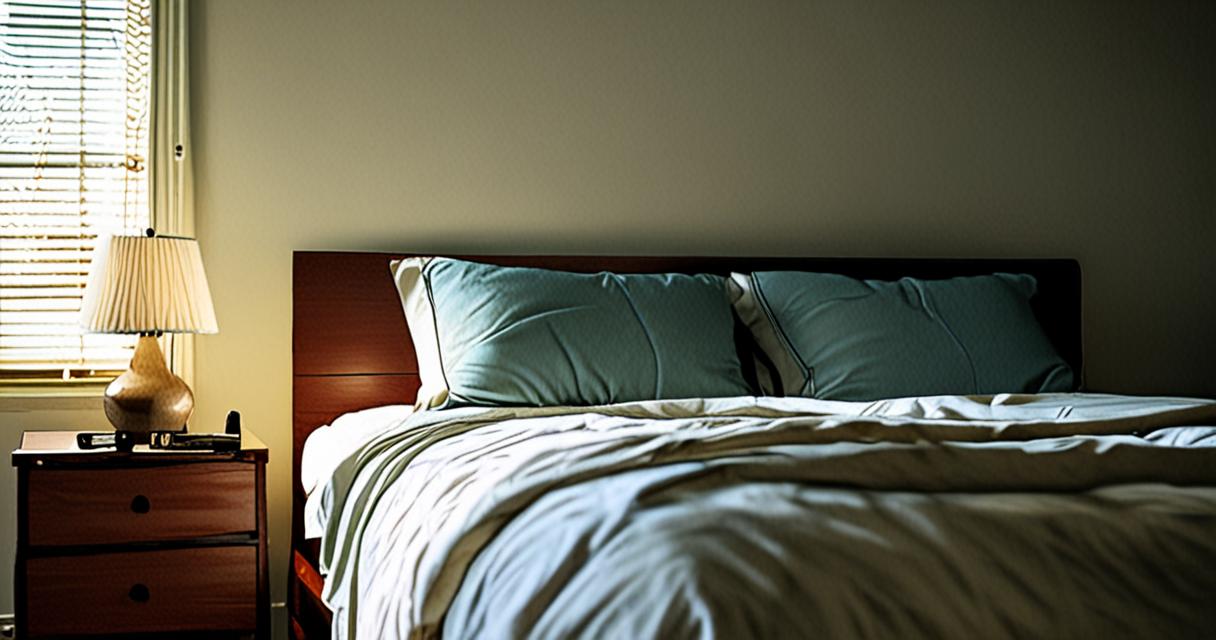
Tomorrow is planned. You have even found a reasonable explanation for whatever was bothering you. Yet when you turn out the light, there is still a restless feeling in your chest, and you feel like letting out a little “meow” under the covers. It is the sort of night when the meeting in your head has ended, but your body is still pacing the hallway.
Thinking of your mind as a researcher and your body as a cat might make that feeling a little easier to work with. It is simply a metaphor for noticing your own state, though. No special sleep benefit from making cat sounds has been established. The interesting question is less about which word you say and more about what happens to your voice, breathing, bedding, and attention while you say it.
Check what you have reasoned through and what your body feels separately
You may have sent that reply and decided there is nothing left to worry about, while your shoulders are still tense or the room is too hot. Jumping from “I have made sense of it” to “I should be able to sleep now” can leave you with another job: trying to persuade your sleepless self all over again.
This is where the cat metaphor comes in. Rather than giving a cat a slide presentation on bedroom safety, you would probably get further by dimming the bright lights and checking how comfortable its bed is. People, too, can find it easier to choose what to try when they name what is bothering them: “worry about tomorrow,” “too hot around my neck,” or “my habit of checking the clock.” No diagnosis of a feline personality is required.
A “meow” does not need a single organ as its destination
When you make a quiet sound, you hear your own voice, feel a vibration in your throat, and change how you use your breath. Adjusting the covers changes what you feel against your skin. You can notice each of these changes without being able to pin down the mechanism on the spot: “That sound stimulated my vagus nerve and sent a safety signal to my brain.”
For comparisons, ordinary descriptions are enough: “Making a sound helps me avoid rushing the out-breath,” “It feels easier without the sound,” or “Paying attention to my chest makes me more aware of the discomfort.” People settle in different ways. A cat sound, a regular hum, or silence are all options, and you do not have to put a hand on your chest or belly.
Research on slow breathing is not a trial of meowing yourself to sleep
In a 2021 study by You and colleagues, 59 people took part in conditions involving breathing at six breaths per minute. Sessions lasting 5, 10, 15, and 20 minutes were compared with a control condition in which breathing pace was not prescribed. During paced breathing, RMSSD, a measure of variation in the intervals between heartbeats, was higher than in the control condition. This measure did not differ by session length, however.[1]
That does not mean “meow for five minutes and you will fall asleep.” The outcome measured was an indicator of heart rate variability, not the time it took to fall asleep or the effect of cat sounds. Nor does it support the idea that longer is better, or that you should stretch each out-breath as far as possible. If you try something yourself, keep your breathing comfortable; do not tighten your throat or repeatedly force deep breaths. Stop if you feel dizzy or short of breath.
Real cats’ purring is interesting for a different reason
How does a cat’s throat produce such a low sound? In a 2023 experiment by Herbst and colleagues, passing air through larynges removed from eight cats produced low-frequency sounds resembling purring, even without neural input or muscle contraction. That experiment alone cannot fully explain how nerves and muscles contribute to purring in a living cat.[2]
What the study reveals is something surprising about how the sound is produced. It did not establish that humans can improve insomnia by imitating cats, or that particular vibrations heal organs. If you want to borrow something from cats, the easygoing idea that “I can look for a comfortable place” is probably a better fit than a mission to reproduce their sound frequencies.
Dimming the lights involves both body-clock timing and comfort
Research has examined the relationship between evening light and the body clock. In a small 2014 study by Burgess and colleagues, eight healthy people experienced a week of dimmer home lighting and a week of brighter home lighting, beginning four hours before their usual bedtime. After the brighter-light condition, the time when melatonin began to rise was, on average, about an hour later than after the dimmer-light condition.[3]
That does not mean dimming a light instantly switches on “cat mode,” or that complete darkness suits everyone. Some people feel more comfortable with lower lighting; others notice their worries or heartbeat more when things become quiet. While limiting bright light before bed, it is also worth keeping enough light to move around safely and choosing a level that feels reassuring. Darkness does not have to become an endurance event.
If you want to experiment, change one thing rather than add more rituals
To choose something to try tonight, start by naming one thing that is bothering you. Too bright? Adjust the lighting. Too hot? Adjust the bedding. Tasks running through your head? Make a brief note. Changing everything at once makes it harder to tell what helped. On a night when you want to try a sound, wait until you feel sleepy and add a soft “mmm” or “meow” to an easy out-breath.
Keep any vocal experiment brief and comfortable, and feel free to stop partway through if you become sleepy. There is no need to score yourself on how many minutes you managed. If your usual covers feel comfortable, there is no reason to add heavy bedding. Avoid covering your face or wrapping yourself so tightly that breathing becomes difficult, and adjust things if you feel hot or compressed. These are examples of low-burden adjustments, not an established “cat-sound protocol” for treating insomnia.
If rules such as “I cannot sleep unless I make the sound” or “I must do it the right number of times” start making you tense, loosen those rules. A habit meant to help you settle should not turn into another bedtime exam. You can investigate why something worked tomorrow. When the cat is about to nod off, do not call the researcher back in.
On sleepless nights, there are options besides a longer meow
If lying awake is making you increasingly frustrated, you do not have to keep working at the sound. The US National Heart, Lung, and Blood Institute describes stimulus control therapy as one approach to insomnia: go to bed when sleepy and get out of bed for a while if you cannot sleep. If you can move around safely, you could spend some quiet time elsewhere and return to bed when you feel sleepy again.[4]
Seek advice from a healthcare professional if difficulty falling asleep persists and interferes with daytime life, if going to sleep itself feels frightening, or if you make sounds that are difficult to stop voluntarily. Loud snoring or pauses in breathing during sleep should also be taken seriously rather than brushed aside as a bedtime quirk. For long-term insomnia, cognitive behavioral therapy for insomnia, or CBT-I, is usually recommended as the first treatment option.[4]
Tonight’s goal is not a perfect score in cat ownership
The appeal of “a researcher’s mind, a cat’s body” is that it offers a reason to check your comfort instead of treating your sleepless self as lazy. If the cat idea does not resonate with you, you can leave it out. What matters is finding out what helps you feel at ease and what adds an unnecessary burden.
Some nights, a “meow” may help your shoulders relax. On others, doing nothing may make it easier to sleep. You have no obligation to get the same result every night. Lower the lights, straighten the covers, and call an end to today’s research. A little closing-up routine like that can be enough of a starting point for taking a rest.
References (4)
[1] You, M. et al. (2021). Single Slow-Paced Breathing Session at Six Cycles per Minute: Investigation of Dose-Response Relationship on Cardiac Vagal Activity. https://pubmed.ncbi.nlm.nih.gov/34886206/
[2] Herbst, C. T. et al. (2023). Domestic cat larynges can produce purring frequencies without neural input. https://doi.org/10.1016/j.cub.2023.09.014
[3] Burgess, H. J. & Molina, T. A. (2014). Home lighting before usual bedtime impacts circadian timing: a field study. https://pubmed.ncbi.nlm.nih.gov/24918238/
[4] NHLBI. Insomnia: Treatment. https://www.nhlbi.nih.gov/health/insomnia/treatment