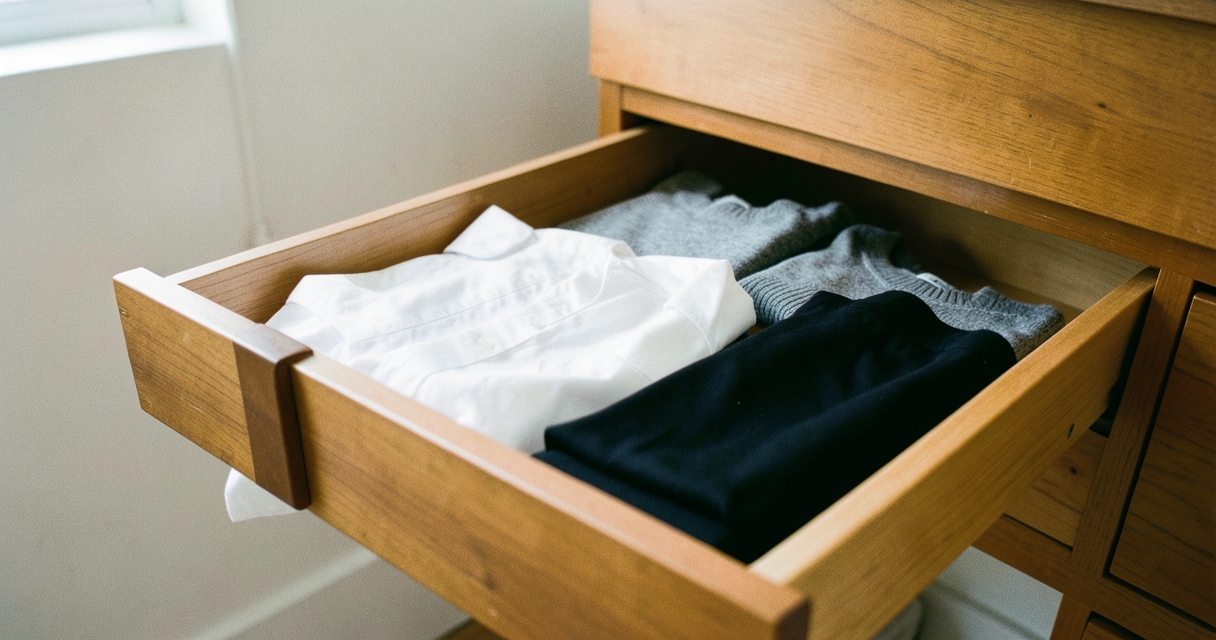
Wash the clothes, dry them, line up the corners, fold every item to the same width, and point them all the same way. Getting dressed seems to have acquired its own inspection parade.
Living alone can bring a surprise: some of those steps can go, and life still works. Before demanding faster folding, it is worth asking, “When did we agree that clothes had to be folded that way?”
Agree on what counts as finished
Separate chores into (1) the minimum needed for cleanliness and safety, (2) what the family has agreed is good enough, (3) one person's preference. Conflict appears when someone demands a neater finish, forbids leaving out any steps, gets exhausted, and takes that tiredness out on everyone else. Choosing a very careful finish is fine; the extra work you chose for yourself is not automatically everyone else's responsibility. Japan’s 2021 time-use survey shows large differences between husbands and wives in unpaid work among couples with children under six. Research also counts the work done in your head: anticipating what will be needed, finding different ways to do it, deciding which to choose, and checking how things are going. Childcare can carry a real burden while some household steps are still unnecessary. That’s a separate issue.
Ask whether folding is needed before asking for faster folding
Before demanding faster folding, ask whether folding is needed at all. Leaving clothes on hangers, using separate bins, or cleaning when it is actually needed can remove steps without losing what matters. Families must agree not only on who does a job, but how much has to be done before it counts as finished. You can thank someone for their effort and still ask whether every step was needed.
[1] Statistics Bureau of Japan: 2021 Survey on Time Use and Leisure Activities, couples with children under 6. [2] Daminger, A. (2019). The Cognitive Dimension of Household Labor. DOI: https://doi.org/10.1177/0003122419859007