When you want to eat Kagoshima kurobuta, the first decision is already annoying in the best possible way: shabu-shabu or tonkatsu?
Then tonkatsu creates another menu tree. Minced-pork cutlet or loin? Regular “Jo” or extra-large “Tokujo”? Set meal or à la carte?
At Tonkatsu to Shabushabu Kurobuta Fukuya Honten in Kagoshima’s Tenmonkan area, the final choice was the extra-large kurobuta loin cutlet, ordered à la carte.
The first reaction was much simpler than the menu.
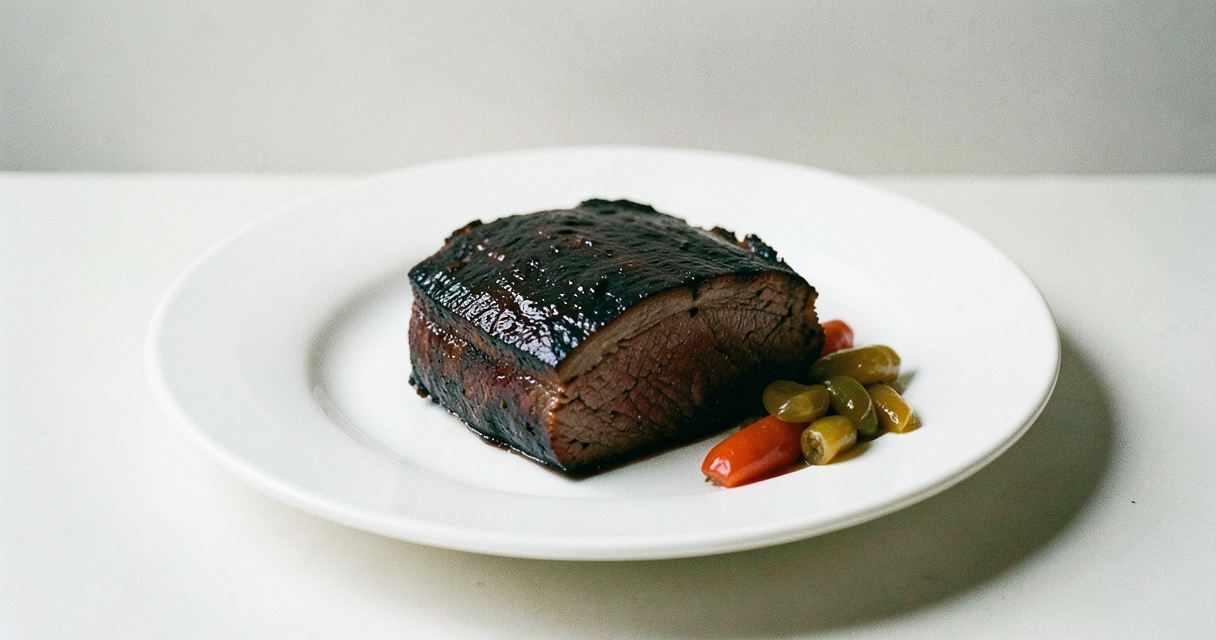
The fat tastes sweet. It is juicy. It almost melts.
That one bite explains why Kagoshima black pork can feel very different from an ordinary pork cutlet.
0. The 30-second answer: if you want to taste the pork itself, the extra-large loin makes sense
A minced-pork cutlet is about seasoned ground meat and its juices. A loin cutlet lets you taste the intact meat, the boundary between lean and fat, and the flavor of the fat itself.
Current menu listings give a useful clue about “Jo” versus “Tokujo”:
- Jo loin: 150 g
- Tokujo loin: 250 g
So the clearest published difference is portion size, not a documented meat-quality grade.
The set meal adds rice, nameko mushroom soup, kimchi and cabbage. À la carte removes those extras.
If you are traveling and still want room for other Kagoshima food, ordering the biggest pork portion without the rice is strangely logical.
1. The cheaper temptation: kurobuta minced-pork cutlet
The kurobuta menchi-katsu set was tempting because it was much cheaper. The in-store menu on the day showed 1,500 yen for a three-piece set.
That is a good entry point if the goal is simply to try a black-pork fried dish.
But menchi-katsu changes the texture by grinding and reshaping the meat. It can be extremely juicy, yet it is not the best format for asking, “What does this loin itself feel like?” or “How does the fat taste on its own?”
A simple way to put it:
Menchi-katsu is about the meat juice. Loin tonkatsu is about the meat and the fat.
Neither is automatically better. They answer different cravings.
2. Jo vs Tokujo: what actually changes?
The restaurant’s menu listings show Jo at 150 g and Tokujo at 250 g. Tokujo also carries a note that frying may take around 20 minutes.
That is 100 g more pork, about 1.67 times the Jo portion.
The names can sound like formal quality grades, but the public menu does not clearly document a separate quality classification. The concrete difference we can verify is the amount of meat.
So “Tokujo” can effectively mean, “You asked for more pork. A lot more pork.”
3. Set meal vs à la carte: same main character, fewer side characters
The set meal includes rice, nameko soup, kimchi and cabbage.
The à la carte order is not a lower-grade cutlet. It simply removes the meal set around it.
That matters on a food trip. Rice is excellent, but it occupies stomach space with frightening efficiency.
The strategy here was simple:
More pork. No rice.
A highly specialized lunch build.
4. Ordering the 250 g Tokujo loin à la carte
The final order was the 250 g extra-large kurobuta loin without the set meal.
It sounds excessive until you remember the point of the meal: to taste Kagoshima black pork.
If the memory you want to take home is “I ate kurobuta,” allocating most of the meal to the kurobuta itself is not irrational at all.
The side dishes can lose a battle for stomach capacity. The pig gets the budget.
5. The first bite: sweet fat, juicy meat, a melting sensation
The first surprise was the fat.
“Sweet” does not mean sugary. It means the richness has a mild sweetness and savory depth rather than a heavy, stale greasiness.
Then comes the juiciness. The lean meat does not immediately dry out; moisture and meat juices remain under the crust.
Finally, “melting” is the easiest sensory word.
It does not mean the entire fat cap literally becomes liquid at mouth temperature. The meat is tender, the fibers separate easily, and the fat and juices soften the bite so quickly that “it melts” is how the experience registers.
Some tonkatsu makes you think, “Great crust and sauce.”
This one makes you think, “The pork is doing the work.”
6. Why can Kagoshima kurobuta taste sweet and juicy?
Kagoshima Prefecture and the Kagoshima Kurobuta Producers Council describe several characteristics of the brand: fine muscle fibers, tenderness, good bite, high water-holding capacity, and relatively abundant components associated with umami and sweetness.
Kagoshima kurobuta is based on Berkshire pigs. Production rules also require feed containing roughly 10–20% sweet potato during the later fattening period for at least 60 days.
That does not mean the pork tastes like a sweet potato.
It means the feeding standard is one part of how fat quality and meat texture are managed, contributing to the sweet, savory and clean finish for which the pork is known.
So “the fat tastes sweet” is not just travel-food poetry. It points in the same direction as the region’s documented meat-quality characteristics.
7. A fun contradiction: “melts in your mouth,” yet the fat has a higher melting point
Here is the nerdy part.
It is tempting to explain a melting mouthfeel by saying, “The fat must have a low melting point.”
But Kagoshima’s official materials say the opposite: kurobuta fat has a relatively higher melting point than common pork fat, which helps it feel less sticky and cleaner on the palate.
So do not turn the sensory phrase “it melts” into fake science.
The melting sensation can come from tenderness, fine fibers, moisture, easy bite, the way the fat breaks down while chewing, and the cooking method.
The experience can be real even when the lazy explanation is wrong.
8. Which should you order?
Choose the kurobuta menchi-katsu if you want the cheapest easy entry into fried black pork.
Choose the 150 g Jo loin if you want intact loin but 250 g sounds like a personal challenge.
Choose the 250 g Tokujo loin if the kurobuta itself is the main event.
Choose à la carte if you want to save stomach space for more Kagoshima food.
Choose the set meal if this is your full lunch and you want rice, soup and sides to complete it.
The Tokujo à la carte combination is the slightly chaotic tourist option: maximum pork, minimum supporting cast.
9. Why you should trust the in-store menu over one web listing
Online prices for this restaurant do not perfectly agree.
As of the October 2026 check, different Hot Pepper-related pages and Gurunavi show some different prices for the same items. Gurunavi and an ISIZE listing show the kurobuta menchi-katsu set at 1,500 yen, Jo loin at 150 g, and Tokujo loin at 250 g.
Restaurant prices can change, and third-party pages may update at different times or separate lunch from general menus differently.
For an actual visit, the menu in front of you wins.
Arguing with a pork cutlet because a cached page was 100 yen cheaper is not the best use of a Kagoshima lunch.
10. Bottom line
The final choice was a kurobuta Tokujo loin cutlet à la carte.
The logic was: spend stomach capacity on 250 g of pork, not on rice.
The reward was exactly what a simple food memory should be:
sweet fat, juicy meat, and a bite that feels like it melts away.
The most memorable part was the fat, which is often the piece people leave behind on ordinary pork.
With Kagoshima kurobuta, that fat is part of the reason to order the loin in the first place.
Sources
- Rakuten Gurunavi, Kurobuta Fukuya Honten menu: https://r.gnavi.co.jp/f73zjf3v0000/menu2/
- ISIZE Gourmet, Kurobuta Fukuya Honten menu: https://www.isize.com/hotpepper/Z097/J004050226/menu/
- Kagoshima Prefecture, Kagoshima Kurobuta: https://www.pref.kagoshima.jp/ag01/sangyo-rodo/nogyo/nosanbutu/brand/kurobuta.html
- Kagoshima Kurobuta Producers Council: https://www.k-kurobuta.com/about/
- Hot Pepper Gourmet, lunch menu: https://www.hotpepper.jp/strJ004050226/lunch/