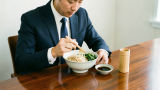
0. Isn’t a giant tub of yogurt better than weekday beer?
If you want one small pleasure at the end of a workday, a large tub of yogurt is surprisingly competitive with beer.
It is cold. It comes in a big container. You can eat it slowly while watching something. Visually, the ritual is almost identical to drinking.
The important difference is that there is no alcohol.
WHO describes alcohol as a toxic, psychoactive and dependence-producing substance, and notes that even low levels of consumption carry some health risk.[1][2] Yogurt, meanwhile, is treated as a dairy food and can provide nutrients such as protein and calcium, although the nutritional profile varies by product.[3]
So this is not simply a calorie duel.
One is primarily a recreational drink. The other is food.
If the goal is to replace the evening reward ritual, that distinction matters.
1. Giant yogurt is not an infinite health buff
A 400- or 500-gram container does not turn into medicine just because it says yogurt on the label.
Sweetened products can contain substantial sugar. Richer products can contain more fat and energy. Even plain yogurt still contributes calories when the portion becomes enormous.
The useful claim is much simpler:
It can be an enjoyable food that makes it easier to reduce routine alcohol consumption.
That is enough.
Giant yogurt is not a pharmaceutical intervention.
It is giant yogurt.
2. Then lunch arrives and Matsusaka beef crashes the discussion
Just when the weekday health routine looks settled, another thought appears:
What about Matsusaka beef?
Matsusaka beef is not simply beef from somewhere near Matsusaka. Officially, it must meet defined conditions, including being an uncalved female Japanese Black animal registered in the Matsusaka Beef Individual Identification Management System and meeting specified fattening-area requirements.[4]
Even the Japanese spelling has rules: the official form is 松阪牛, not the commonly mistyped 松坂牛.[4]
A conversation about yogurt has now turned into livestock traceability.
Hunger is an extremely effective research grant.
3. A ¥1,595 Matsusaka beef hamburger and a ¥4,015 beef set are different products
A publicly listed lunch menu at one Matsusaka beef restaurant showed a Matsusaka beef hamburger set at ¥1,595 and a Matsusaka beef set at ¥4,015.[5]
Both can honestly become “I ate Matsusaka beef,” but they answer different desires.
The hamburger is a low-cost entry point into the brand. The grilled-meat set is closer to evaluating the meat itself: fat, aroma, texture and cuts.
So the cheaper choice is not fake, and the expensive choice is not automatically superior.
¥1,595 buys entry into the idea of Matsusaka beef. ¥4,015 buys a closer look at the beef itself.
Both can make sense if you know which experience you are purchasing.
4. A cheap training café and premium beef are not competing in the same sport
Lunch alternatives may include inexpensive daily-meal cafés, including vocational training cafés where staff and trainees prepare food together.[6]
Asking whether that is “better value” than Matsusaka beef misses the point.
A low-cost daily lunch is excellent at being daily lunch.
Premium regional beef carries rarity, local identity and event value: “I went there specifically to eat this.”
The useful question is not which one wins.
Are you buying nutrition today, or collecting an experience?
That usually resolves the dilemma.
5. Then the department-store basement turns “mom food” into luxury merchandise
Department-store food halls are fascinating.
Simmered vegetables. Grilled fish. Rolled omelet. Bento. Braised meat.
Foods that look completely normal at home suddenly acquire polished packaging, bright lighting and a four-digit price tag.
In one September 2026 month-end sale, a department store advertised premium beef trimmings at ¥594 per 100 grams, two slices of braised pork at ¥1,080 and a bento at ¥1,800.[7]
Yesterday it was dinner. Under department-store lighting, it becomes a curated object.
Even simmered root vegetables can apparently have stage presence.
6. But the price is not just the ingredients
“Making it at home would be cheaper” is true.
It is also incomplete.
Prepared-food prices include prep, cooking, portioning, sanitation, staff, rent, packaging, small-batch handling, unsold inventory risk, checkout and one very valuable product:
the right to do absolutely none of that yourself.
The more ordinary the dish looks, the harder this is to notice.
Nobody is shocked that a steak costs restaurant money.
But when a small box of simmered seaweed costs real money, the human brain suddenly becomes an investigative accountant.
The seaweed did not ask for this scrutiny.
7. “It was free at home” usually means somebody else’s labor was priced at zero
Food served at home often has no visible transaction.
That makes its mental price feel like zero.
But grocery shopping, menu planning, prep, cooking and washing dishes did not disappear. Someone performed them.
Once you live alone and perform the same sequence yourself, an expensive-looking prepared dish can start to look less absurd.
Buying it every day may still wreck the budget.
But part of the price is effectively domestic-labor outsourcing.
The store sells simmered vegetables.
It also sells “you do not have to cook simmered vegetables tonight.”
8. Food value is not the lowest price; it is knowing what you paid for
Giant yogurt, a cheap lunch, Matsusaka beef and department-store prepared food should not all be ranked by cost per meal.
They solve different problems.
Yogurt can replace part of the evening drinking ritual.
A daily lunch feeds you efficiently.
Matsusaka beef buys a regional premium-food experience.
Prepared food buys food plus time and labor.
Value is not merely paying less. It is paying only for the things you actually wanted.
Once those categories are separated, food spending becomes much easier to understand.
9. Conclusion: giant yogurt on weekdays, premium beef sometimes, and an outsourcing fee hidden in the simmered vegetables
Replace routine weekday alcohol with a big yogurt when that works for you.
Eat ordinary affordable lunches most days.
Try the regional premium food when the experience itself matters.
And on an exhausted day, pay too much for a dish that looks suspiciously like something your family would make at home.
There is no contradiction.
Health, price, pleasure, rarity and labor are separate dimensions.
Premium beef every day can destroy the budget.
Alcohol every day adds health risk.
Perfect home cooking every day consumes time.
So the practical solution is wonderfully unglamorous:
Hold the giant yogurt on weekdays. Pay for the cow occasionally. Outsource the simmered vegetables when life is annoying.
That is a perfectly coherent food strategy.
Sources
- World Health Organization. “Alcohol.” Fact sheet, 28 June 2024 who.int
- WHO Regional Office for Europe. “No level of alcohol consumption is safe for our health.” Published 2022; page amended 17 September 2026 who.int
- MyPlate.gov. “Dairy Group – One of the Five Food Groups. myplate.gov
- Matsusaka City. “What is Matsusaka Beef?” Accessed 29 September 2026 city.matsusaka.mie.jp
- Hot Pepper Gourmet. “Matsusaka Beef Tando Yokkaichi – Lunch Menu.” Updated 2 July 2026 hotpepper.jp
- Universal Employment Center. “Training Café Sprout” / daily lunch information univa2015.jimdoweb.com
- Kintetsu Department Store, Yokkaichi. “Month-end Special.” September 23–29, 2026 d-kintetsu.co.jp