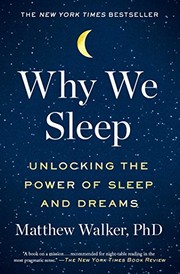
“My hobby is sleeping.” “I clean.” “I watch a lot of TV, but I can’t remember what.” “I literally stare at the ceiling.” Dig into those answers and modern leisure starts to look less like an empty void and more like low-friction recovery time compressed into the label ‘nothing.’
1. “I did nothing” may just be a compressed activity log
Japan’s 2025 Cabinet Office survey found that the most common ways people spend free time were sleep/rest (53.7%), TV/DVD/CD viewing (46.8%), hobbies and entertainment (43.7%), and internet/social media (35.9%).[1]
So the average day off is not necessarily hiking, pottery, or saving the world.
It may look more like:
wake up → phone → food → video → laundry → phone → nap → shopping → TV → food → phone → sleep
Ask at night, “What did you do today?” and the answer becomes:
“…Nothing.”
That is because “one hour of YouTube,” “two anime episodes,” “40 minutes of social media,” “laundry,” and “a nap” may never be indexed as separate events.
“Nothing” may simply be the ZIP file name for a day full of tiny, forgettable activities.
2. Sitting in front of a TV and watching only anime is almost impressive now
Sit down. Start an anime episode. Watch the anime—and only the anime—for 24 minutes.
For people who live in permanent media-multitasking mode—anime + phone, gaming + video, food + video, work + audio, TV + another screen—single-task viewing can feel like a cinema ritual.
In an experiment on TV news, second-screen use increased cognitive load and reduced recall and comprehension compared with single-screen viewing.[2] That study used news rather than anime, so its exact effects should not be generalized directly, but the underlying point is simple: attention allocated to a second screen is attention no longer fully available to the first.
Thus “I watched anime for three hours” can describe two very different activities:
Focused viewing: the work itself is the activity.
Background viewing: the show runs while something else remains primary.
Same number of hours. Different experience.
3. “I clean all day” probably does not mean eight straight hours of vacuuming
“What do you do on weekends?”
“Cleaning, I guess.”
“All day?”
“Yeah.”
Probably not eight uninterrupted hours of scrubbing the floor.
A more realistic log might be cleaning, laundry, tidying, breaks, phone time, food, TV, then some more tidying. The person simply compresses the whole day under the representative label “cleaning.”
Actual log: three chores + phone + lunch + rest + TV
Self-summary: cleaning
Listener’s mental image: eight hours with a vacuum cleaner
Result: conversational system failure
4. “I watch TV a lot.” “What do you watch?” “…I forgot.”
This is not a contradiction.
The person may not be watching a program so much as performing the habit of watching TV.
Turn it on after getting home. Watch whatever is on. Check the phone during commercials. The program changes. Keep watching.
What remains in memory is not a title but a behavior category: TV.
Among younger people, smartphones increasingly occupy this role. NTT DOCOMO’s 2025 Mobile Society White Paper reports especially long smartphone use among younger women; more than 40% of teenage girls reported six or more hours per day.[3] A 2024 survey also found that more than 40% overall watched smartphone video for at least two hours a day, while roughly 30% of teenagers of both sexes and women in their twenties reported six or more hours of smartphone video viewing.[4]
The modern version is therefore:
“What did you do?”
“Phone.”
“What were you looking at?”
“…I don’t remember.”
The screen time exists. The episodic memory does not.
A leisure-time black hole.
5. Not “animalistic”—more like “zoo mode”
The metaphor that fits best is:
stare → sleep → eat → stare → sleep → eat
The rhythm of watching a dog, cat, or capybara at a zoo.
“Animalistic” here does not mean unintelligent. It means a state in which goal-directed activity is switched off and behavior follows bodily needs and whatever stimulus happens to be nearby.
No schedule. No performance target. Sleep when sleepy. Eat when hungry. Watch the thing that is already playing.
Humans become capybaras on weekends.
And that is not inherently bad.
The real distinction is whether you choose capybara mode or whether exhaustion leaves you capable of nothing else.
6. Is everyone tired? The data make that plausible
In the 2025 Cabinet Office survey, 25.1% said they had “not much” free-time leeway in daily life and 9.0% said “almost none”—34.1% combined.[1]
Japan’s Ministry of Health sleep guidance also notes that roughly 40% of adults sleep less than six hours, and around 30% of adults aged 20+ report low sleep restfulness, based on national health and nutrition survey data.[5]
On the work side, the 2024 Occupational Safety and Health Survey found 68.3% of workers reported some matter causing strong anxiety, worry, or stress related to work or working life. The questionnaire format changed, so comparisons with earlier years require caution.[6]
This does not prove everyone is exhausted. But this sequence is highly plausible:
weekday consumes physical and attentional resources
→ planning a new weekend event feels expensive
→ low-friction activities such as sleep, TV, and phones win
→ the personal summary becomes “I did nothing”
What people do now and what they would do with more free time are strikingly different
| Activity | Do now | Would do with more free time |
|---|---|---|
| Travel | 19.7% | 61.5% |
| Hobbies/entertainment | 43.7% | 41.5% |
| Sleep/rest | 53.7% | 32.2% |
| TV etc. | 46.8% | 15.5% |
| Internet/social media | 35.9% | 9.3% |
| Sports | 24.1% | 27.2% |
That gap is revealing.[1]
People currently spend a lot of time resting, watching TV, and using the internet, yet if granted additional time, travel dominates.
This does not establish causality, but it supports a reasonable interpretation:
People may not fundamentally want to do nothing.
The small amount of leisure they currently have may favor the cheapest forms of recovery.
Maybe people do not dream of becoming capybaras. Maybe they simply have a lot of evenings when capybara is the only available build.
7. Why travel, drawing, and marathon people look unusually active
If the people around you routinely travel, draw or paint, run, master games, take walks, research things, build things, and write, then “a day off” naturally becomes time in which you generate your own events.
Drawing is especially illustrative. Watching is input. Drawing is unmistakably output:
observe → decide → move your hand → use skill → leave something behind.
Evidence on arts and wellbeing varies in design and population, but several reviews associate participatory and creative activities with psychological and social wellbeing.[7]
Running adds physical activity. Travel adds planning and movement. Creating adds production. In each case, you are the source of the event.
It is tempting to joke, “Genes, maybe?” But temperament, energy, family culture, available time, money, and work fatigue probably combine into something better described as a weekend operating system.
8. Passive leisure does not need to be ranked below active leisure
Anime, TV, YouTube, naps, and staring into space are not morally inferior because they do not produce output.
If weekends need KPIs too, we eventually get:
“Staring productivity is down 12% year over year.”
“What’s the corrective action?”
“Hire more capybaras.”
Vacation has now become a quarterly business review.
Sleep itself is essential, and Japanese health guidance emphasizes not only sleep duration but also the subjective sense that sleep was restorative.[5]
So the useful distinction is not:
active = good / passive = bad
but:
I am choosing to rest / I am too depleted to do what I want
When does “I stared at the ceiling all day” become concerning?
One such day can be an excellent day off.
However, Japan’s Ministry of Health advises seeking professional help when multiple symptoms—such as loss of interest in previously enjoyable activities, persistent lack of energy or motivation, or excessive sleep—continue for two weeks or more.[8]
Therefore: ceiling staring ≠ illness.
The relevant question is whether the person is comfortably resting or unable to do things they actually want to do.
9. “What has been eating your time lately?” may work better than “What are your hobbies?”
“Hobbies?” is a surprisingly difficult question. Routine activities that a person does not classify as hobbies never appear in the search results.
Better questions are:
- What do you do when you stay home on a day off?
- What has been eating your time lately?
- What do you usually watch on YouTube?
- Any anime you are watching now?
- Where do you go when you feel like going out?
- What activity makes you feel most relaxed?
Someone who initially says “nothing” may suddenly reveal anime, games, videos, cooking, cleaning, or walking.
They may not lack hobbies. They may lack labels.
Conclusion: weekends contain happy capybaras and tired capybaras
People’s days off are remarkably ordinary:
sleep, rest, TV, phones, chores, food, and occasionally a named hobby.
Then they compress all of that into:
“Nothing.”
Meanwhile, many say they would travel if they had more time.
The final taxonomy may be this simple:
Happy capybara: “Today I am deliberately doing nothing.”
Tired capybara: “I want to do something, but I have energy only to stare.”
From the outside, they look identical:
stare → sleep → eat → stare.
Inside, they are completely different.
References (8)
- Cabinet Office, Government of Japan — Public Opinion Survey on the Life of the People (2025)
- Van Cauwenberge, A., Schaap, G., & van Roy, R. (2014). “TV no longer commands our full attention”: Effects of second-screen viewing and task relevance on cognitive load and learning from news. _Computers in Human Behavior, 38_, 100–109
- NTT DOCOMO Mobile Society Research Institute — Mobile Society White Paper 2025, Chapter 1
- NTT DOCOMO Mobile Society Research Institute — Daily smartphone video viewing time (2024-10-21)
- Ministry of Health, Labour and Welfare, Japan — 健康づくりのための睡眠ガイド2023
- Ministry of Health, Labour and Welfare, Japan — 令和6年 労働安全衛生調査(実態調査)ほか
- Reviews on participatory arts, creativity, and wellbeing
- Ministry of Health, Labour and Welfare, Japan — こころもメンテしよう:うつ病を知っていますか?