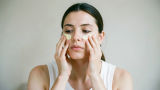
The idea at the center: if you're trying to get clearer skin, irritating it along the way defeats the purpose. This piece sorts out what VT's official labeling for VT CICA RETI-A ESSENCE 0.1 says, alongside general dermatology knowledge.
Don't Damage Your Face in the Name of Good Skin
The 5-second answer: protect your face before you reach for the serum
Retinoids can cause dryness, redness, itching and stinging. Even if you put the product on your whole face, itching only on the nose can happen when the amount, friction, dryness or moisturizer coverage differs from spot to spot. But you can't say "nose only means not enough moisturizer" for sure.
Here's the most important thing:
If you keep hurting your skin while trying to improve it, it's game over.
A high-performance serum isn't an attack stat. Don't turn your own face into the final boss of a speedrun for pretty skin.
1. What's actually going on when only your nose itches?
Retinoids are a large family of vitamin A-related ingredients. They're used for acne and sun-related aging, and they're also known for local redness, dryness, itching and a stinging feeling.
Here are some hypotheses for why only the nose reacts:
- More serum stayed on your nose or the sides of your nostrils.
- The moisturizer wasn't spread evenly.
- There was more friction from tissues, masks, face washing, or touching your nose.
- The skin around your nose was dry or irritated just that day.
- That area reacted strongly to some ingredient in the product.
You can't pin down the culprit from the symptom alone. "The itchier it is, the better it's working" and "it's just a purge, so tough it out" have no real basis either. Skin doesn't level up through sheer willpower.
2. What's in VT CICA RETI-A ESSENCE 0.1?
On VT's current official page, the product name is VT CICA RETI-A ESSENCE 0.1, and it comes in 30 mL.
The ingredient list includes niacinamide, Hydroxypinacolone Retinoate (HPR), centella asiatica extract, gluconolactone, bakuchiol, capryloyl salicylic acid, ceramide NP, retinol, fragrance and more.
There are two important corrections here.
First, don't read the "0.1" in the product name as "0.1% retinol." From the official page we can currently check, that number can't be confirmed as a retinol concentration. When we see a decimal point we want to turn it into a percentage right away, but an ingredient list isn't a calculator.
Second, don't read "BHA" on an ingredient list as beta hydroxy acid. In Japan's cosmetic labeling names, "BHA" means butylated hydroxyanisole, an antioxidant. This product lists capryloyl salicylic acid separately. Same abbreviation, different job. Chemistry has a nasty first-time trap.
3. Why dryness and itching can happen
Retinoids are useful, but they're not a magic wand with zero irritation. Reviews of the research repeatedly point to irritation as the main problem.
The AAD (American Academy of Dermatology) suggests starting retinoids slowly and using moisturizer to keep irritation down. The outermost layer of skin, the stratum corneum, works as a barrier that helps keep water in and irritants out. There are also clinical studies that looked at using a barrier-supporting moisturizer alongside a retinoid to reduce irritation.
So the question isn't a choice between "the serum is bad" and "moisturizer fixes everything."
Does the budget balance between the active ingredient attacking and the barrier defending?
If your barrier's household budget runs a deficit every night, your face goes bankrupt first.
4. "Slick and dripping" doesn't mean "moisturized"
A face that's wet, slippery, or shiny is not proof that moisturizer reached your whole face evenly.
If you mix serum and moisturizer in your palm and slap it on, what you actually get can look like a construction report:
- Cheeks: plenty
- Forehead: probably fine
- Nose: feels like it got passed over
- Sides of the nose: no one's in charge
Moisturizer helps skin tolerate irritating treatments. If you're the type who often loses track of where you've applied things, it's easier to manage by putting moisturizer on your whole face first, by itself.
Skincare doesn't need a land surveyor, but we'd like fewer unbuilt lots.
5. Is it bad to mix moisturizer with a retinoid?
There's no evidence that it becomes hazardous the moment you mix it in your palm. On the other hand, general knowledge alone can't guarantee the stability, distribution or performance when you mix your own moisturizer with this serum.
The practical problem is simpler:
When you mix them, it's hard to tell what you put where, and how much.
The AAD lists applying moisturizer first as one way to reduce irritation. If you want to isolate the cause, it's better to separate the steps:
- Moisturizer on your whole face.
- Let it sink in.
- A small amount of the retinoid product on areas with no problems.
That way you leave a log. Mixing is a hero of saving time, but weak at accident investigation.
6. If your nose itches, is it okay to ban just the nose?
VT's official guidance says that if redness, swelling, itching or irritation appears during use, stop using it and, if needed, consult a dermatologist.
So there's no point in charging at an itchy nose every night.
Even if you think about continuing after the symptoms have fully settled, the general approach to retinoid irritation is to use less, use it less often, and use moisturizer. If the same spot itches every time, redness lingers, or the area spreads, it's best to have a dermatologist check, including for things other than simple dryness, such as contact dermatitis.
Your nose doesn't need to go through spiritual training.
7. The "pea-sized amount" problem
With prescription retinoids and similar products, the phrase "pea-sized amount" is often used.
However, the current official product page for VT CICA RETI-A ESSENCE 0.1 doesn't confirm one pea as the official amount.
So we won't write that "one pea for the whole face is the official amount" for this product. For the exact number of pumps or the amount, follow the usage instructions the manufacturer publishes.
And once you start asking "how many millimeters is a pea, anyway?", it's a pretty farm-flavored unit of measurement. Where did the milliliter civilization go?
8. Hurting your skin for the sake of good skin: the self-defeating trap
A common skincare trap is stacking too many effects.
Retinoid. High-concentration vitamin C. AHA. BHA-type acids. Scrubs. "They all sound strong, so let's use them all."
VT's official Q&A also says to avoid using the RETI-A series at the same time as products containing acidic ingredients such as high-concentration vitamin C, AHA and BHA.
A stronger ingredient isn't automatically better. In the long run, what matters is keeping irritation low so you can stay consistent.
Your skin isn't the gear screen of a gacha game. Stack six top-rarity pieces, and if your defense is negative, you'll go down anyway.
9. A minimal routine for lazy people that's hard to mess up
Night
- Wash gently.
- Moisturizer on your whole face.
- Only on days when your skin feels calm, apply a thin layer of the retinoid product.
- Don't put it on spots that are itchy, red or irritated.
Morning
- Moisturizer as needed.
- Sunscreen.
The AAD recommends sun protection while using retinoids.
Just splitting it into two steps, "moisturizer, then active," cuts down a lot on uneven application and mystery incidents. You don't need a 12-person beauty counselor ritual.
10. "You'll get used to it" isn't the rule
Mild dryness or irritation when starting a retinoid isn't unusual. But that doesn't mean the right answer is to keep going while putting up with the itch.
VT advises stopping use if anything abnormal appears. The AAD also says to stop any skincare product that causes redness, itching or swelling, and to seek medical advice for strong reactions.
Severe swelling, blisters, widespread hives, intense pain, strong swelling around the eyes, or trouble breathing shouldn't be brushed off as "classic retinol stuff."
11. Final conclusion: skincare only works if you protect your face
Only your nose itches. You feel like you moisturized, but you don't know how far you applied it. You mixed it with the serum and slapped it all on. And then you realize: "Am I hurting my skin to make it look better?"
That question gets to the heart of it.
The goal of skincare isn't to use up the active ingredient. It's to get your skin into better condition.
If irritation shows up, stop. Separate the moisturizer. Manage the amount and the area. Don't decide on your own that a number or an abbreviation means a concentration or an acid. See a dermatologist if you need to.
A serum is your ally, not an opponent for a one-on-one fight with your face.