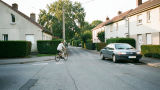
A black-and-white car rolls past.
There's even something like a light bar on the roof.
Your brain decides in 0.2 seconds.
"Police car!"
Then you look at the lights, and they're blue, not red.
Suddenly your whole worldview wobbles.
"A blue police car...? Is that a palette-swap skin?"
Nope.
In Japan, this combo is usually not a police car at all. It's often a blue-light crime-prevention patrol car, nicknamed "Aopato" (short for "blue patrol"). [1][2]
The shortest way to put it:
Red: "I'm the real deal."
Blue: "I'll call the real deal if needed."
But there's one important catch to this rule of thumb.
The light itself doesn't create any authority.
Switching on a red light doesn't make you police, and switching on a blue light doesn't make you the neighborhood sheriff.
A light is closer to a name tag.
It isn't some alchemy item that spawns a legal status.
In this article we'll sort out the black-and-white body, red lights, blue lights, the word "patrol car," what Aopato can and can't do, and the question "if someone gets reported, don't they end up getting caught either way?"
1. The short answer: the light is a name tag, not a power generator
First, separate how a car looks from its legal standing.
An ordinary police patrol car in Japan is a vehicle run by the police, and its black-and-white paint and red warning light are its strongest visual features. According to the Tokyo Metropolitan Police Department, Japan's patrol cars became black and white so they'd be easy to spot at a glance back when most ordinary cars were white, and the look was standardized nationwide in 1955. [3]
An Aopato, on the other hand, is a car used for volunteer crime-prevention patrols by local governments, neighborhood watch groups and similar organizations that meet certain requirements and have received certification from the head of the prefectural police. [1]
The order matters here:
- A police patrol car is a police vehicle because the police operate it.
- An Aopato is a car within an official system for volunteer crime-prevention activity.
- Red and blue lights are just part of the equipment that makes that standing and purpose easy to read from outside.
In other words,
"So is the light the main thing?" -> No. Affiliation and legal status are the main thing. The light is the UI.
In game terms, the icon over a character's head only shows their job. Sticking on the icon doesn't unlock the skill tree.
2. Black-and-white car with a red light: the police car you picture
Black-and-white police cars are used for police work: patrolling, first response to crimes and accidents, traffic guidance and enforcement.
Reference material on safety standards from the Ministry of Land, Infrastructure, Transport and Tourism says the warning light of an emergency vehicle must be red and visible from 300 meters ahead. [4]
Still, let's not oversimplify here either.
A police vehicle with its red light on isn't always in emergency-driving mode, free to do anything.
Police sometimes run the red light during ordinary patrol work. The Tokyo Metropolitan Police Department also uses patrol cars with red lights on to remind people to drive safely. [3]
So a red light is great at making the police visible, but one red flash doesn't make every rule of the Road Traffic Act evaporate.
And more fundamentally, a car doesn't make arrests. Police officers carry out their duties under the law.
The patrol car's hood doesn't fold open and slap on handcuffs.
3. Black-and-white car with a blue light: the blue-light crime-prevention patrol, "Aopato"
Aopato are cars that private groups, local governments and the like use for voluntary patrols to keep their communities safe. [1][2]
Normally, fitting a car with a blue rotating light is prohibited. But an organization that meets certain requirements and gets certified by the head of the prefectural police can use a blue crime-prevention light while on patrol. [1]
What the activity looks like:
- Driving around the neighborhood
- Watching over children on their way to and from school
- Checking for suspicious people or vehicles
- Making crime less likely by patrolling in a conspicuous car
- Reporting crimes or suspicious situations to the police when they see them
The National Police Agency lists the advantages of Aopato as being able to cover a wide area and being easy to notice even at night. [1]
So the presence is considerable.
A black-and-white-looking body with a flashing blue light has plenty of visual pressure.
But this is where a common misunderstanding kicks in.
"If they got certified by the police to run a blue light, aren't they basically half police?"
No.
The National Police Agency is explicit: being an Aopato does not grant any special authority. [1]
The Aichi Prefectural Police put it even more plainly: even with the blue light on, the car is treated exactly like any ordinary car, and has to follow the Road Traffic Act and other laws. [2]
Installing a blue light doesn't install a "police authority DLC."
4. What Aopato can and can't do
The core of Aopato is crime prevention, watching over the community, observing, and contacting the police.
Typical things they can do: patrol the area, spot suspicious situations, and report to the police when needed.
On the other hand, the Aopato qualification or certification itself gives no basis for doing what police officers do, such as traffic enforcement, questioning people on the street, or issuing traffic tickets. [1][2]
And in a dangerous situation, "just chase them" is not the answer either.
The National Police Agency's Q&A on crime-prevention patrols says that if you run into a criminal, a suspicious person or a suspicious vehicle, you should quickly tell the police their features, direction of travel and so on, and not chase them recklessly, but make sure you're safe. [5]
So the basic Aopato routine goes like this:
Spot -> Observe -> Organize the information -> Report -> Back off if it's dangerous
In a movie, a car chase would probably start here, but the official manual shuts that down.
The philosophy is: "Don't start a Fast & Furious. Call 110." (110 is Japan's police emergency number.)
5. If they get reported and caught, isn't it all the same in the end?
Looking only at the outcome, it can seem that way.
When a red-light police car picks up on a crime or violation, the police themselves respond under the law.
When an Aopato picks up on a crime or suspicious situation, the information goes to the police, who judge whether action is needed and respond accordingly. [5][2]
As a diagram:
Red: Spot -> the police handle it directly
Blue: Spot -> report to the police -> the police respond if necessary
So if a crime really happened, the information was sufficient, and the police identified the target and took the necessary steps, the two paths can merge in the sense that the police end up showing up.
But "it might lead to the same result" and "it has the same authority" are completely different things.
If your family phones in to reschedule a parcel delivery, that doesn't make your family a courier company.
An Aopato can be an entry point for information to the police.
It is not the police itself.
Also, being reported doesn't mean automatic arrest. It's up to the police to judge what happened, what evidence there is, and what legal response is needed.
Blue: "Calling the real deal." -> Red: "First, let's see what actually happened."
That's how it goes; the report button is not a "guaranteed instant-arrest gacha animation."
6. The word trap: "patrol car" vs. Japanese "patokaa"
This is where the language gets interesting.
If you translate the English patrol car literally, it just means a car used for patrolling.
An Aopato really does patrol the neighborhood.
So in a broad sense, you can call it a "car that patrols."
But in everyday Japanese, when someone says "patokaa" (the Japanese word for patrol car), they normally mean a police patrol car.
So there's a mismatch:
- patrol car: can be a general word describing a function
- Japanese "patokaa": used almost like a proper category for police vehicles
- Aopato: a patrol car, but not a "police patrol car" in the usual sense
So "an Aopato is a patrol car too, isn't it?" is quite right etymologically.
But if you go on to say "so an Aopato is a police patrol car too," you suddenly go wrong.
A ramen shop's delivery scooter is a delivery vehicle, but it's not Yamato Transport (a major Japanese courier company).
How broad a word is and what organization someone belongs to are separate matters.
7. A black-and-white body isn't a police license: what should you look at?
A black-and-white color scheme strongly suggests a police patrol car.
That makes sense, since the police themselves have used it for years as an easily recognizable scheme. [3]
But being painted black and white does not itself create police authority.
Depending on the body design, even an Aopato can look very much like a patrol car.
To tell them apart, rather than judging by one color, it's better to look at several things:
- Is the warning light red or blue?
- Does the body carry "POLICE" or the name of a police department?
- Is there a marking such as "Crime Prevention Patrol" or "Blue-Light Crime Prevention Patrol"?
- Is the name of the operating organization written on it?
Aopato are run so that they display that they're on crime-prevention patrol, along with the organization's name and so on. [2]
In short,
Black and white is the face. The light is the name tag. The affiliation marking is the embroidery on the uniform. The authority is the law.
It's like not deciding someone's identity from their face alone.
8. A comparison table to remember in 30 seconds
| Item | Police black-and-white patrol car | Blue-light crime-prevention patrol car (Aopato) |
|---|---|---|
| Main operator | Police | Certified local governments, crime-prevention groups, etc. |
| Typical warning light | Red | Blue |
| Main purpose | Patrol, response to crimes and accidents, enforcement, etc. | Voluntary crime-prevention patrols, watching over the community, deterrence, reporting |
| Special police authority from the Aopato system | n/a | None |
| Traffic enforcement | Done by the police under the law | Can't be done on the grounds of Aopato status |
| Treated as an emergency vehicle | Police vehicles that meet the conditions may drive in emergency mode | Being an Aopato doesn't make it an emergency vehicle |
| Spots a suspicious person, etc. | Takes necessary action as police | Reports features, direction of travel and so on to the police, and stays safe |
| Can you tell by black-and-white paint alone? | No | No |
If you want it in one line:
Red = a car with the real deal aboard. Blue = a car doing community crime prevention that connects to the police when needed.
That gets you right most of the time.
9. Common misunderstandings
Can an Aopato chase down and stop a traffic violator?
Aopato status gives no authority to enforce traffic law the way the police do. Official guidance also says not to chase dangerously and to report to the police instead. [5][2]
If an Aopato sees me, can I ignore it?
"Not the police" doesn't mean "nothing will happen." If they witness a crime or something suspicious, they may report it to the police. Treating an Aopato like an "invalid object" is a mistake.
Is every patrol car with its red light on in emergency-driving mode?
Not necessarily. Patrols are also done with the red light on. Whether it counts as emergency driving depends on legal requirements, not just the color. [4][3]
Can anyone become an Aopato by putting on a blue light?
No. Blue rotating lights and similar equipment are normally restricted, and the system is that organizations meeting certain requirements get certified by the head of the prefectural police. [1]
So is the light the most important thing after all?
It's a big hint for telling them apart.
But it's not the main thing.
The light is a status display. It is not the status itself.
10. Summary: red is "the real deal," blue is "calls the real deal." But the core is legal status, not the light
A black-and-white car with a blue light looks a lot like a police car.
But Japan's blue-light crime-prevention patrol is a separate system from police patrol cars.
Aopato patrol the community, deter crime, watch over people, and play an important role in passing suspicious situations on to the police.
At the same time, being an Aopato doesn't add any special police authority. [1][2]
Even when they meet a criminal or a suspicious person, the official basic approach is to report and stay safe, not to chase recklessly. [5]
So the easiest way to remember it is this:
Red: "I'm the real deal."
Blue: "I'll call the real deal if needed."
And one last step to be precise:
The light is not the main thing.
A red bulb doesn't issue an arrest warrant.
A blue bulb doesn't evolve a neighborhood watch volunteer into a sheriff.
Body color and lights are both visual signs that let people read the meaning in an instant.
What decides legal authority is who is acting, in what capacity, under which law.
They look like siblings.
Legally, they're separate households.
References (5)
- Japan National Police Agency — 青色回転灯等装備車の運用状況 / 青パトについて npa.go.jp
- Aichi Prefectural Police — 自動車に青色回転灯等を装備した自主防犯パトロール pref.aichi.jp
- Tokyo Metropolitan Police Department — 交番まめ知識(パトカーの始まり・白黒塗装の由来)および赤色灯を用いた警戒活動の公開資料 keishicho.metro.tokyo.lg.jp
- Ministry of Land, Infrastructure, Transport and Tourism — 道路運送車両の保安基準(2026年3月31日現在)・緊急自動車の警光灯関連基準 mlit.go.jp
- Japan National Police Agency — 自主防犯活動Q&A Q12(犯罪者・不審者等に遭遇した場合の通報、安全確保、無理な追跡を避ける案内) npa.go.jp