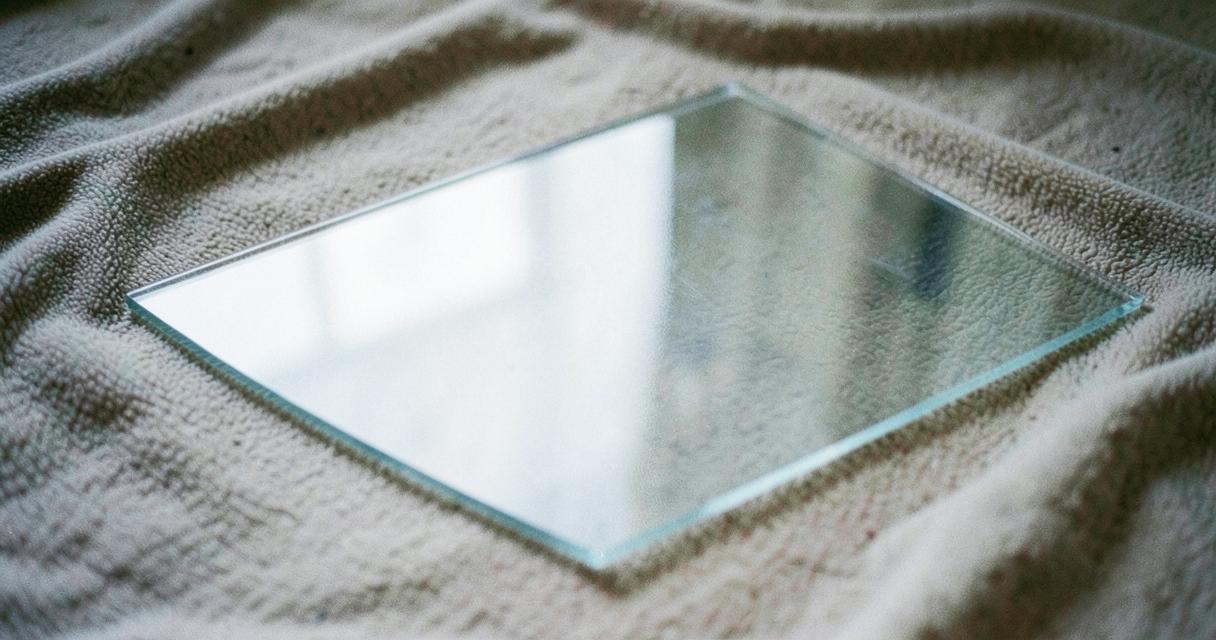
“What’s that clear, flat board you put under a PC called?”
An acrylic sheet. The idea was to give the PC a firm surface on bedding or carpet. Find the name, buy the board, job done. Then another question came up: “Why would a board make it flat?”
The options included sheets around A3 size: 300 × 400 mm or 300 × 450 mm, roughly 5 mm thick. Those were shopping examples, not sizes guaranteed to suit every PC. Somehow, buying a piece of plastic had turned into a discussion about what “flat” meant.
A firm surface does not straighten a sloping floor
On a soft surface, the PC’s small feet can sink in. A sufficiently rigid, flat sheet spreads the weight over a larger area and bridges small bumps. It gives the PC a firm place to sit.
But put it on a sloping floor and the sheet slopes too. A surface can be flat without being level. Acrylic does not come with a built-in gravity sensor that tilts it back into position.
If the feet are sinking, a rigid board can help. If the whole setup is tilted, you need to adjust the supports or use suitable shims to correct the height.
We started by looking for the name of a clear board. We ended up finding two different problems hiding inside “make it flat.” Quite a detour for a sheet of plastic.